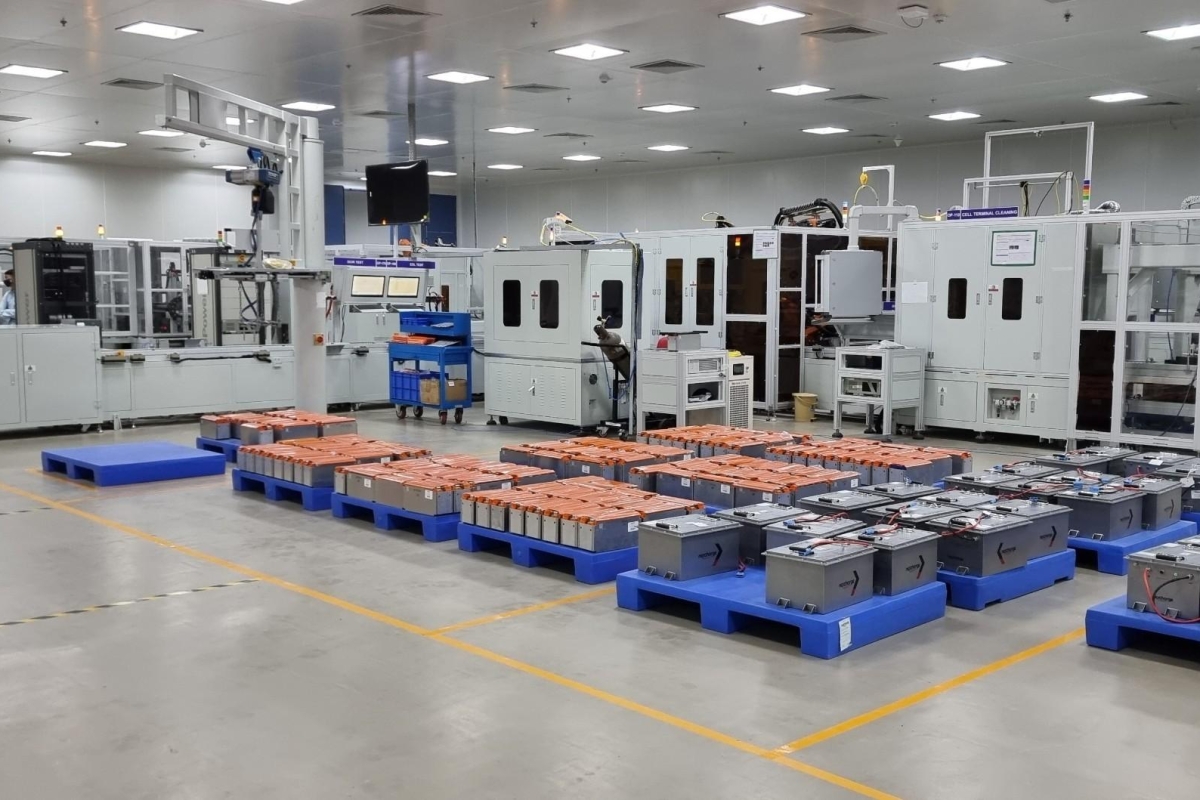
Bengaluru, September 24, 2026: Exide Energy Solutions Limited (EESL), a material subsidiary of Exide Industries, has commissioned the first phase of its lithium-ion cell manufacturing facility at Devanahalli in Karnataka. The development marks a significant step in the company's plans to establish domestic manufacturing capabilities for advanced battery cells used in mobility and energy-storage applications.
According to a company filing reported on September 24, Phase-I of the facility was commissioned on September 23. The first phase has an annual manufacturing capacity of 6 GWh of lithium-ion cells. The company said the facility is designed to manufacture advanced lithium-ion cells across multiple chemistries and form factors.
Lithium-ion cells are a key component in electric vehicles, energy-storage systems and several other applications that require rechargeable battery technology. As electric mobility and renewable-energy storage expand, battery manufacturing has become an important part of the broader industrial and technology ecosystem.
The Devanahalli facility therefore represents an effort to increase India's domestic capabilities in an area that has strategic importance for the growing electric-vehicle and energy-storage sectors.
Exide Industries' subsidiary, EESL, is responsible for developing the company's lithium-ion cell manufacturing operations. The company has been investing in the battery-cell business as part of its longer-term strategy to participate in emerging energy technologies.
The commissioning also has relevance for Karnataka, which has developed a substantial technology, manufacturing and electric-mobility ecosystem. Devanahalli, located in the Bengaluru region, has become an important industrial and infrastructure corridor, supported by its proximity to Kempegowda International Airport and other major transportation links.
Following the announcement, Exide Industries shares moved higher during Thursday's trading session. Business Today reported that the stock rose 1.72 per cent to touch ₹434, compared with the previous close of ₹426.65. Share-price movements, however, can change throughout the trading session and should not be interpreted as a guarantee of future performance.
The new manufacturing capacity could contribute to the development of a broader domestic battery supply chain. Battery-cell production involves several stages, including cell manufacturing, quality testing, assembly and integration into battery packs and energy-storage systems. Building these capabilities within India can support companies operating in electric mobility and stationary energy storage.
The facility's ability to produce cells across different chemistries and form factors is also significant because battery requirements vary according to the intended application. Electric vehicles, consumer electronics and stationary energy-storage systems can require different performance characteristics.
The commissioning of Phase-I does not represent the completion of Exide's entire battery manufacturing programme. Instead, it marks the beginning of production from the first stage of the facility. Future developments will depend on production ramp-up, technology deployment, customer demand and the company's investment plans.
For Karnataka, the project adds another major industrial development to the state's growing clean-energy and advanced-manufacturing ecosystem.